
The first question we get from birders coming to the island is ‘Can you recommend locations to visit to spot birds?’ This question has many different possibilities as answers. Curaçao might be relative small in surface, but has incredible variety of both native birds, migratory birds and new introductions whether by natural forces, or mankind, non-problematic of invasive. It all depends on what species you want to see exactly and how much time you have to spend searching for birds. In this series we introduce you to a variety of areas depending on the type of birds you want to see. With some tips and tricks and do’s and don’ts. This is the second article in a series of 10!
What’s in a name
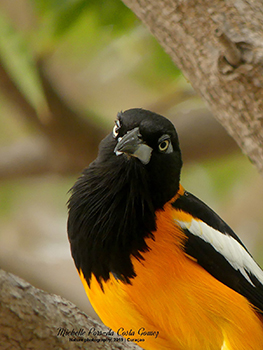
If we have to guess which bird species on the island is the most photographed by visitors it might very well be the brightly orange coloured Troupial. At the same time it is one of the most common birds on the island and is as part of the landscape to local people as the large columnar cacti you can find all over the island. It is no wonder this bird almost always adorns advertisements, campaign and magazine articles about Curaçao.
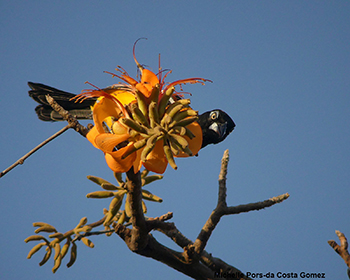
There is however some discussion on the name of this tropical bird in English. In many books you will find it with the name ‘Venezuelan Troupial’ and in others as simply a Trupial. The Icterus icterus as it is called in the scientific world, is the national bird of our neighbouring country, but it is by no means constricted to this country. It was probably because of its status in this country that the Venezuelan part was slowly included in the common name. On Curaçao (Bonaire and Aruba) it is simply called Troupial (troepial in Papiamentu) or Orange Troupial to distinguish it from the more yellowish Yellow Oriole.

Where to find the orange Troupial
As this is one of the most common species on the island, which can be found all over the island it might seem easy to find them. However this is one very deceptive species as the moment you start looking for them, it can prove remarkable difficult. Your best bet is to check out the premises of your hotel or B&B. If there are flowering trees, fruit trees like mango trees, or just overflowing garbage bins, chances are you will find a troupial in the vicinity. Is there a restaurant serving breakfast or lunch with coffee and sugar sachets, chances are ever increases. These birds are very inquisitive and are not afraid to try to steal part of your meal if given a chance.
Of course photographing these birds in a more natural surrounding might be more your cup of tea. Especially in the period of January to August you can often find troupials enjoying the fruits of columnar cacti on the side of the road to Bandabou and in the area of Knip, Lagun and Christoffelpark. They also frequent beaches with café’s or beach bars which gives ample opportunity to try picturing them with the bright blue sea as a background.
Warning!
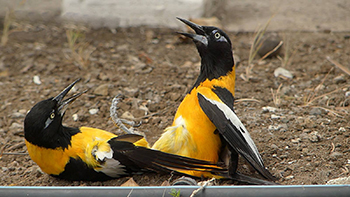
Troupials can be dangerous during their breeding season as they will attack intruders to their territory by picking with their beaks. They can cause serious injuries to your face and even photo equipment if you are not careful. So if you experience an attack, try to remove yourself from the location.

 Bird Watching Curaçao - HOME