
The first question we get from birders visiting the island of Curaçao is: ‘Can you recommend locations we can visit to spot birds?’ This question has many different answers. Curaçao might be relatively small in surface, but has an incredible variety of both native birds, migratory birds and new introductions whether by natural forces, or mankind, non-problematic or invasive. It all depends on what species you want to see exactly and how much time you have to spend searching for birds. In this series we introduce you to a variety of areas depending on the type of birds you want to see. With some tips and tricks and do’s and don’ts. This is the nineth article in a series of 10!
Ducks can be found on Curaçao!
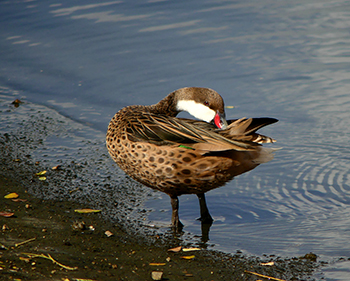
Despite the fact that Curaçao is a semi-arid island with a very limited amount of rainwater each year and hardly any natural fresh water ponds, there are several duck species which can be found (some only in certain periods during the year) on the island and even 2 duck species that actually breed here. One of these is the photogenic White-cheeked pintail, a bird which can be found in the wider Caribbean and also the south of Florida.
Artificial fresh water ponds

In the past White-cheeked pintails were seasonal breeding birds, coming to the island after heavy rain showers filled up the many dams on the island, providing the perfect habitat for nesting. With the building of several (now mostly non functioning) water treatment plants with open water ponds and the development of golf courses with fresh water ponds (usually from partly treated sewage water), this species is now a year around bird also breeding throughout the year. However, you can also have the chance to meet this species in the deeply salty saliña’s along the south coast of the island, swimming in the water at Jan Thiel for instance. They usually don’t breed along salt water regions, and do prefer fresh of brackish water.
Which dams are the best for watching these ducks?
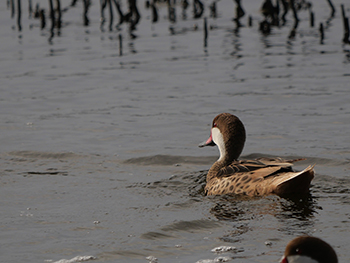
Of course dams, filled with water, offer the most natural way of observing these birds in their habitat, but dams are only occasionally filled with rain water. Therefor it is always a good idea to inform with local inhabitants what the rainy season has been like in the past months and if the larger dams, famous for ducks have filled up and are offering opportunities to observe ducks and other waterfowl. Another way of staying up to date on possibilities is to check out the hotspot locations with the most attractive dams regularly on ebird.org. When there is an increased activity of checklist on these areas you can be sure that there is something to see here.
Click on the links for the hotspots of:
– Dam Muizenberg RAMSAR-site(easy to reach by car)
– Dam Malpais RAMSAR-site (park at Vaersenbaai/Kokomo and hike to the dam in 25 minutes)
– Dam Kurá Piedra (difficult to find)
Other locations:
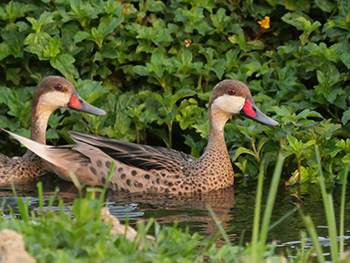
Avid birders know that water treatment plants and landfills are often the ideal locations to spot a large variety of birds. However these areas are not always readily accessible and because treatment plants often don’t work as they should on the island, these areas are hazardous to your health. The water treatment plant of Klein Hofje is a place where you can spot many waterbirds including White-cheeked pintails. However, park your car at the other side of the main entrance and spot through the fence, while keeping an eye on your car. There is a trail around the outer side of the plant, but when the system is severely clogged sewage water will be blocking your way. Besides your car might be at risk as cars are often broken into when the owner is not in sight.
Another location to observe white-cheeked pintail during the entire year is the golf course of Blue Bay. Please note that hikers and birders are not allowed on the golf course, with steep fines when doing this anyway. The ducks can be observed very well from the terrace and the golf club or just on the opposite of the road just before the signs with fine indications.

 Bird Watching Curaçao - HOME