

Photo by Nelly Rigot
The season for birding surprises is in full swing. Every single year from mid Augustus to the end of the year, the fall migration season of birds delivers a large variety of very regular visiting species. Species such as the Osprey, Barn Swallow and Blackpoll warbler come from North America and take a much needed rest on the island. After fattening up on much needed food, usually most of these birds continue their journey to South America to overwinter, with just a couple of them sometimes staying over the entire winter season only to go back north in spring.
Even though Curaçao has gotten frequent short-lived rain showers in the last couple of weeks, no large body of fresh water is present, except for a secluded dam in the middle of the area of Kura Piedra. The dam is partially filled with remnants of rain water providing a small lake woth ample of food for many waders such as Semi-palmated Sandpipers, Black-necked Stilts and sometimes even flamingo’s. Semi-palmated plovers, American (Caribbean) Coots and Southern Lapwings can also be found in the area at certain moments of the day.
Glossy Ibis
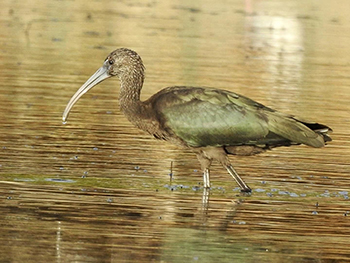
Photo by Nelly Rigot
On August 15th birder Rob Wellens was at the area in the afternoon and spotted the very first Ibis of the year, a shiny Glossy Ibis, which was wading through the water, searching for food. It is clear that the area was not ideal for the bird to stay for a longer period of time, as a group of dogs and also cats were seen often around the water, the dogs entering the water and trying to hunt for some birds. In the days afterwards we visited frequently but were not able to spot the bird in the area. However last week it came back for one afternoon again.
Cosmopolitan species
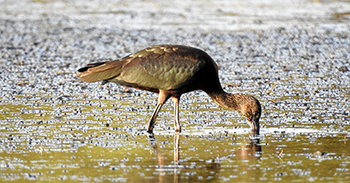
The Glossy Ibis is considered to be a cosmopolitan species, occurring also in Europe, Asia and Africa besides North and South America and the Caribbean. It is unclear whether the individual visiting Curaçao came over from the mainland of the Americas, as they are knows to cross enormous distances.
Besides marshland areas of fresh water, they can also be found in brackish waters and along inner bays and between mangroves. In Europe they are often seen in agricultural fields, sometimes in water treatment plants and also areas with ponds.

 Bird Watching Curaçao - HOME