
Bird watching on Curaçao is a surprise throughout the year. The island may be small (444 square kilometers or +/- 171.4 square miles), but has many small habitats spread out from the east to the west. Even in the inner city of Unesco World Heritage Willemstad, there are many areas where a bird can hide, eat, nest or just rest. Which makes every corner of the island potentially interesting for birders.
Of course the migration season is very interesting for watching bird species that would otherwise not be found on the island. Both the fall migration (mid August to Mid November) and the spring migration (mid April to mid June) are great for watching these unexpected species. However in all the other calendar months things can get interesting for sure, with some species from North America overwintering on the island, and South American and Caribbean species to suddenly appear and disappear. Especially in areas with dams and other waterways that contain fresh water with hiding spaces and a steady food supply, spotting birds can get very exciting. And lets not forget about the native and breeding birds that can be found on the island. Their behaviour and occurrence also makes an very interesting observation opportunity.
Here is a short summary of what you can expect in the month of February.
Special ducks visiting

Despite the fact that the bird migration period of spring migration has not yet started and that autumn migration has actually already ended, there are still opportunities to see special birds from December to February. Sometimes they overwinter on the island, for example when the dams contain water, and sometimes they are on their way to unknown places. They actually hardly sit still.
The American Wigeon. The sturdy duck of about 50 centimetres long has a silver-gray head with a characteristic dark brown tint around the eye. The males have an even whiter stripe running across the forehead and a shiny green mask. Chances are you can encounter one of these when going to inundated dams. Take a good pair of binoculars with you because they can hide quite well among other ducks.
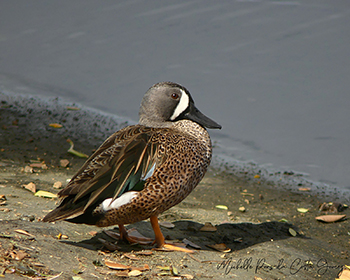
The Blue-winged teal. A smaller duck of about 40 cm with a very visible sexual dimorphism especially now that the males have transformed into their breeding plumage. They do not breed on the island however.
Transformation to breeding plumage
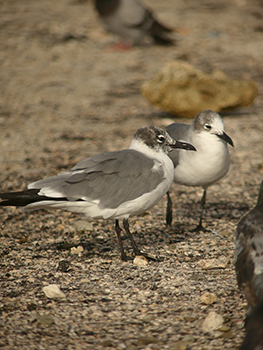
Laughing gulls are slowly but surely becoming more numerous at gathering places such as the wharfs in the city centre and of course Koredor. In the month of February you will also see more and more that the animals are entering the breeding season. The adult animals are slowly but surely getting their breeding plumage consisting of a snow-white plumage with dark grey wings, a dark brown head with a white edge around the eyes, and red beak and legs.
Young birds go into the world

Many bird species that started producing offspring in January finish that by the end of February. Then the young are forced to find their own food and survive. And that is absolutely difficult when the dry season starts. Young Saffron finches still have a very good camouflage for a while, which makes it easy for them to search for grass seed along the road. Now the young are lucky that they live in reasonably large groups where the mass also provides protection and that is no luxury with the Merlin and Peregrine falcon still present on the island.

 Bird Watching Curaçao - HOME
One thought on “Birdwatching on Curaçao in February”