
April, May, June, July and part of August are the months that mark the breeding season of seabirds on Curacao. From February onwards, the numbers of terns and laughing gulls on the island start to grow steadily. In other months they are still a bit more difficult to find, but from February onwards they can be spotted in ever-increasing groups at Playa Kanoa, Klein Curacao, Koredor and a number of other places along the coast. In April, the breeding rituals and nesting begin, a crucial period that we point out every year. And where you too can make a major contribution to making this a successful breeding season. Read on and help!


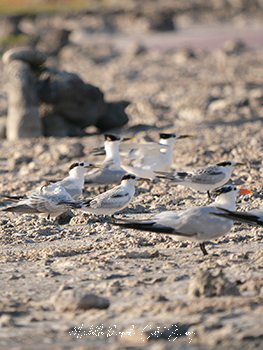
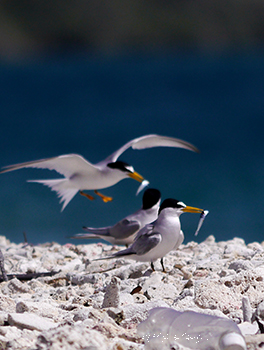
Curaçao has the honour of being the scene of the breeding season of various seabirds including the Royal Tern, the Sandwich Tern, the Common Tern and the Least Tern. In addition, Laughing Gulls also breed on certain coastal zones of the island and there are frequent visits from Brown Noddies, Black Terns, Bridled Terns, Sooty Terns, Roseate Terns and other seabirds, which may not breed on our island but do need the fishing water to feed their young on Aruba, for example.
A short period of breeding activity
The breeding season is a relatively short season that runs from mid-April to the end of early August, depending on the species, but it is a very intensive season. The birds have to form breeding pairs that will lead to a successful breeding result. Partner rituals with complete dances to impress each other, the mating itself, laying the eggs and then hatching them to then help the young on the fragile path to adulthood, are all part of this process. Unfortunately, various seabirds are becoming less and less successful in this process and this is all too often due to careless human actions. Pollution is a major problem. The fact is that more and more chemicals end up in the sea and therefore also in the food that the birds eat, fish. This is a disaster, as certain toxins accumulate in the bodies of the parents and cause the eggshells of the eggs that are eventually laid to be so thin that they break when the adults sit on them. In addition, it is increasingly common for young birds to die because they ingest too much plastic. All the result of waste that ends up in the sea, on our islands but also elsewhere in the world, the pollution of the sea is a global problem. The adult birds catch fish, but can also mistake pieces of plastic that float just below the surface for fish. These are then ‘caught’ and fed to the young as fish. This blocks the gastrointestinal tract and the young will starve.
In addition, our own actions on land also ensure that fewer and fewer young reach adulthood. The main cause of this is the disruption of breeding areas. The locations that these animals need to successfully reproduce are being disrupted on an ever-increasing scale. Sometimes unconsciously because people are often unaware of the damage that is being caused. But the damage is also increasingly being done deliberately and sometimes even on purpose. People who are warned about the damage they are causing with their actions, curse you and deliberately do what has been kindly requested not to do for 2.5 months. With fatal consequences. Because the damage is immense: eggs trampled to pieces and defenceless young torn apart by dogs. A call for alertness is therefore appropriate.
Mating rituals
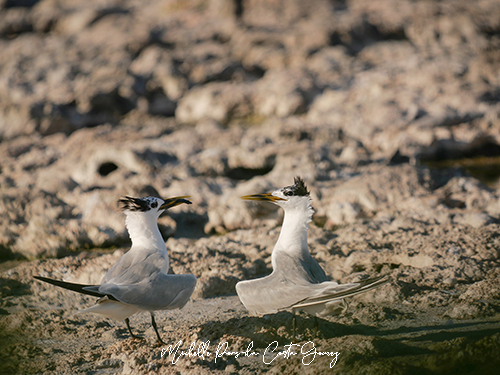
The seabird species mentioned, and with their various other species, start their breeding season in the month of April, something that only happens once a year. Successful reproduction depends on a good choice of partner, not only for strong genes in the offspring, but especially to successfully raise the young. A hungry young eats for two, and then you also need two parents to provide sufficient food. In April it is therefore very possible to spot these bird species while they are courting. In the case of terns and Black-necked stilts (Makamba), a whole dance ritual is performed by the partners that ultimately ends in mating. In the case of terns, gifts, in the form of small fish, are also handed over to strengthen the bond between the two partners.
After mating, the partners must find a suitable location to lay their eggs. All seabirds do this at locations that are not too far from the sea, such as the rugged coastline on the north coast (Playa Kanoa, Vlakte van Hato, Boka Patrick, Ascencion and Shete Boka), the coastline around inland waters such as Santa Martha, the Schottegat and Piscadera Bay, the islands that lie in the middle of the salt pans of Jan Thiel and the salt pans of Boka Samí, and on the walls of these salt pans. Klein Curaçao is also a popular place for these types of birds. And these are precisely the places that are increasingly being used for recreation.
Scouting
In the period from the end of April to mid-May, many species of terns and other seabirds are looking for an ideal breeding place to lay their eggs and raise their young. They do not come back to the same place every year, but look for the best place to nest every year. The breeding place must meet high requirements in terms of peace and quiet. A little disturbance is enough to make the animals decide to leave. That is why it is very important that no disturbing elements can be found at potential breeding locations during the ‘scouting’ period. And everyone who walks, cycles or walks the dogs in nature reserves can help a lot with that.
Nesting locations and an egg on the ground
Terns usually breed in large groups together (breeding colonies). The large number of birds not only provides protection, as more eyes see danger faster, but also reduces the chance of an egg or young being stolen, for example by a hungry Frigate bird or Caracara. The birds usually do not make nests of twigs or grass but simply lay their eggs on the ground, after which both parents take turns to sit on the eggs and incubate them or protect them from the excessive heat of the sun.
Not all birds nest in groups. The Makamba, for example, does not do this, but carefully chooses a spot between the limestone cliffs where the female lays the egg. Terns, on the other hand, do breed in larger groups. Once the eggs have hatched and the breeding colony looks like a disorganised crèche with chicks, the parents know how to find their young by sound and then regularly sit on top of them to ensure that they do not overheat from the sun.
The breeding colonies and the individual hatchers are extremely sensitive to disturbance and will abandon their eggs or chicks without returning at the slightest disturbance in the form of stray dogs, mountain bikers, rat visits, hikers or quad bikers. Resulting in a lost generation.
Keep the peace and quiet in breeding areas, be responsible!
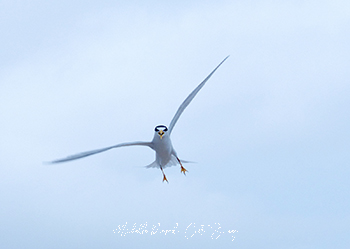
Terns and other water birds that are starting their breeding season this year, which only takes place once, need absolute peace to find a suitable breeding location, lay and hatch the eggs and raise the young. That is why it is very important that users of nature areas and reserves that are located on the coast, behave responsibly and especially observe carefully whether there is courtship behaviour of terns, whether aggressive behaviour can be observed (in the form of closely and loudly skimming over the head, or coming directly towards you and deviating at the last moment), and whether there are certain large groups of seabirds sitting together. If you see this behavior, it is important to leave the area in question immediately and report the behavior together with the location via the Facebook page Bird Watching Curaçao in a private message, or via the ‘Ask your question’ button on http://www.birdwatchingcuracao.com. We can then issue targeted warnings for the areas that are being used as breeding locations this year.
Keep your dog on a leash!
In addition, we request everyone who walks dogs in coastal areas to keep all dogs on a leash until the end of July at least and if breeding activity is observed somewhere, to not walk there until the end of July. It is very important that quad bikers do not drive through the areas mentioned. We also ask mountain bikers and hikers to be vigilant and to avoid areas where breeding activity can be seen.
The areas where caution is necessary are: the Hato plain (along the coast), along the north coast from Ascencion to Westpunt, the salt pans of Jan Thiel (including the islands), the salt pans of Boka Samí, the salt pans of Jan Kok, the coastline along inland waters such as Sint Jorisbaai, Fuik and Groot Santa Martha and Klein Curaçao.

 Bird Watching Curaçao - HOME
2 thoughts on “Help make the seabird breeding season on Curacao a success!”