
Reposted from our sister-site: https://caribbeanfootprint.com/island-endemics-bananaquit/
The term endemism (noun) is explained by Oxford languages as ‘the degree to which the plants and animals of a particular area are both native and restricted to it”. Wikipedia describes it as follows: “Endemism is an ecological word meaning that a plant or animal lives only in a particular location, such as a specific island, habitat type, nation or other defined zone.”
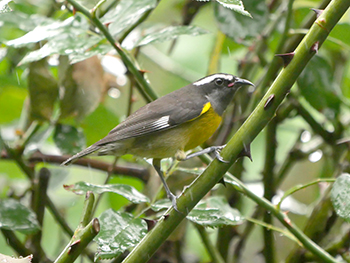
Endemic species are organisms that are native to and restricted to a specific geographic area, meaning they are found nowhere else in the world. This can range from a single island to an entire continent. As such there are species that are endemic to the Caribbean, endemic to specific islands in the Caribbean and even endemic to specific locations within certain islands of the Caribbean. Besides endemic species, we also identify endemic subspecies. These are groups of organisms within a species that because of their isolation have developed changes in behaviour and physical characteristics per location that they occur in. They can still interbreed and recognize each other as members of the same species, but will most likely not get the chance to do this as they are geographically separated. A very good example of endemism at a subspecies level is the case of the Bananaquit. Bananaquits (Coereba flaveola) are a widespread species in both the Caribbean and Central and South America. Because these birds look so very different from each other on each island in the Caribbean and compared to the South American Bananaquits, they are classified as being different subspecies geographically linked to each location they occur in that form. A total of 41 subspecies are recognized. There are discussions about whether several individual subspecies should be classified as endemic species for the locations they occur in. However, that is still not the case and as such we identify them as individual and endemic subspecies. It is important to realize that if you google on the name Bananaquit you will most likely find photos of birds from other Caribbean islands that are physically different from the ones on our island.
Bananaquits on Aruba, Bonaire and Curaçao: 2 subspecies
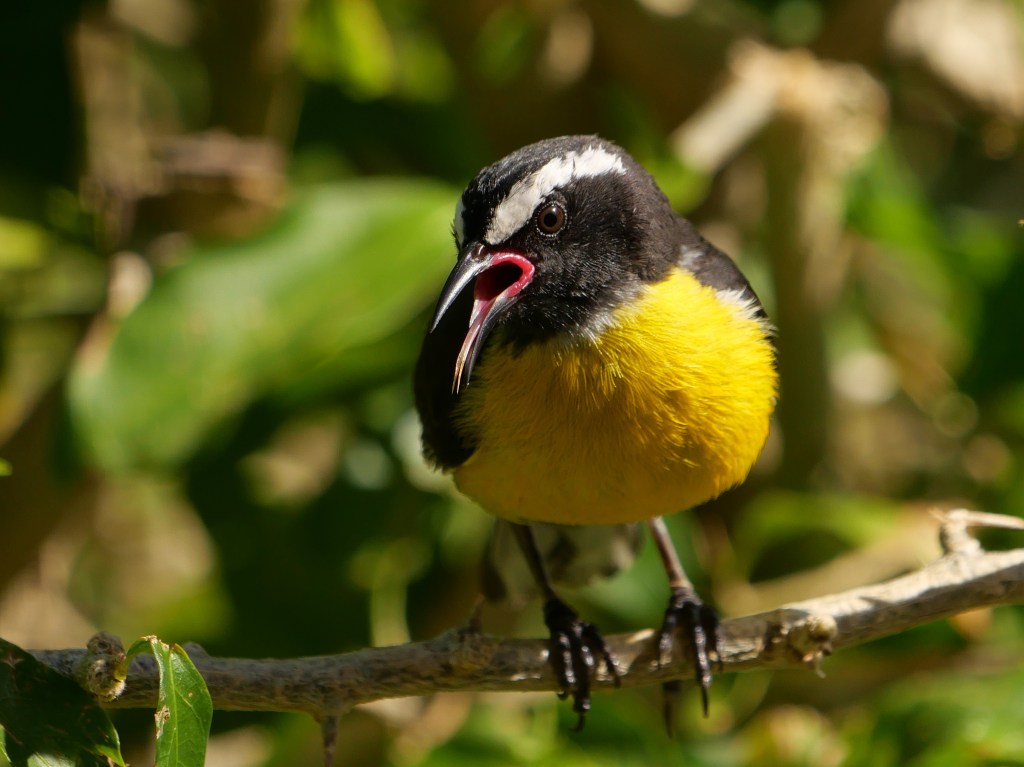


Aruba, Bonaire and Curaçao all have Bananaquits and it is usually one of the most loved species on all three islands. They are not particularly afraid of humans and often live their entire lives in close vicinity of mankind. Searching for food and water in gardens, building nests on the porch and in the garden and often even trusting the human inhabitants of the house to rescue their babies in case they fall out of the nest. Now, the interesting titbit of endemism for our island concerning this birds is that Curaçao and Aruba share an endemic subspecies with the name Coereba flaveola uropygialis whilst Bonaire has its very own endemic subspecies with the name Coereba flaveola bonairensis. If you don’t spend time observing these birds on each of the islands you will likely not realize that there is a difference. The Bonaire subspecies of Bananaquit is slightly different in coloration and has a large bright white patch on its throat. The Aruba/Curaçao subspecies has just a small patch of white on the throat that is only visible when the bird lifts is head.
Of course it will depend on the developments in evolution in the Bananaquits on Aruba and Curaçao for them to start differing from each other in such a way that they would be recognized as separate subspecies. This is not the case at the moment.
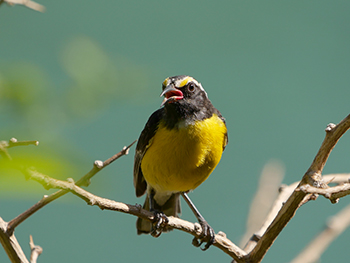
English name: Bananaquit
Dutch Name: Suikerdiefje
Papiamentu/Papiamento name: Bachi pretu (Bonaire), Barika hel (Curaçao), Barica hel (geel) (Aruba)
Scientific name: Coereba flaveola uropygialis (Aruba & Curaçao), Coereba flaveola bonairensis (Bonaire
Family: Thraupidae (Tanagers)
Occurrence (ABC islands): Aruba, Bonaire and Curaçao (Endemic subspecies on Bonaire, endemic subspecies on Aruba & Curaçao.

 Bird Watching Curaçao - HOME