
Bird watching on Curaçao is a surprise throughout the year. The island may be small (444 square kilometers or +/- 171.4 square miles), but has many small habitats spread out from the east to the west. Even in the inner city of Unesco World Heritage Willemstad, there are many areas where a bird can hide, eat, nest or just rest. Which makes every corner of the island potentially interesting for birders.
Mating dance of the Ala duru or White-tipped dove

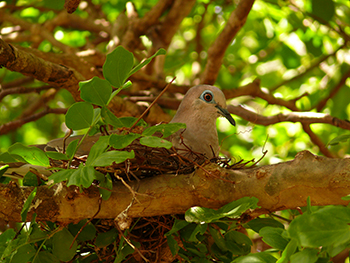
Unfortunately, there are few people who give pigeons a second look. Even the local pigeon species can usually hardly charm people, except with the question whether it is edible. In most gardens on the island one or more native pigeon species can be found. Not feral rewilded rock pigeons or city pigeons, but native species such as the Totolika or Common ground dove, the Ala blanka or Bare-eyed pigeon, the Buladeifi or Eared dove and the Ala duru or White-tipped dove. The latter actually does not adhere much to real breeding seasons and is especially not put off by a dry or rainy period in rural areas. As the pigeons forage for their food in the vicinity of people, there is usually enough to be found to breed at random times during the year. Strangely enough, they do this in large numbers in the month of July, among others. Perhaps this has to do with the lack of breeding activity of other tree-breeding bird species, which gives them more peace of mind.
In any case, breeding starts with the conquest of a partner, and in the case of the White-tipped dove, this is done with special dance moves. First, the male makes his presence known with a soft but far-reaching ‘ooeeeeeeh’ sound. This can sound a bit sad and is sometimes difficult to pinpoint. If a female comes near, the male will test the willingness of the female of his choice. But in the end, it is the female that has the last choice. This testing involves carefully approaching the female with the wings and chest slightly expanded, lowered through the legs and with soft sounds. If the female is willing, they touch each other with their beaks and the dance begins. In doing so, the two birds will step around each other with their necks and wings expanding or folding, while they lower themselves through their legs from time to time. Only when this ritual, which can take quite a while, is completed does mating take place. And that is usually a matter of a few seconds. The dancing always takes place on the ground and is therefore easy to observe. The photos show a photo of a moment of the dance, and then the female lying on the nest with eggs, a nest that is nothing more than a few twigs and grasses thrown together carelessly.
Nature in the city
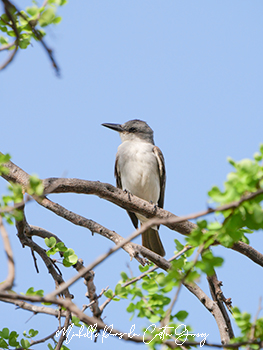
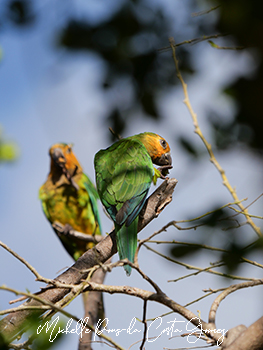
When drought strikes in the increasingly scarce natural environment (mondi), you will find a great variety of fauna in the city, both in Otrobanda and Punda, including endemic (sub)species. Tourists who ask for tips on spotting birds are always advised by us to visit the city centre and not only to look at the beautiful, restored or otherwise, buildings and coastal works, but also to look for small gardens with flowering plants for hummingbirds, electricity wires for the Grey King bird (Pimpiri) and old fruit trees such as tamarind trees or almond trees for the endemic Curaçao brown-throated parakeet. Those who seriously look for birds in the city will come across very nice surprises and usually end up with an impressive list of diversity. Of course, always with respect for personal property and grounds.
Breeding season of plovers
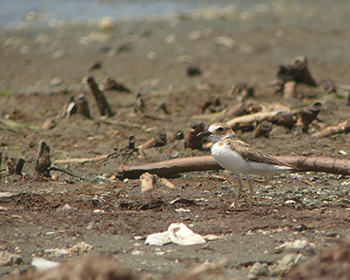
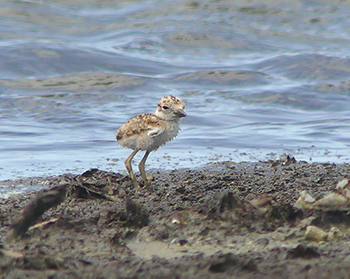
The time frame from the end of March to mid-August is, roughly speaking, the breeding season of sea and coastal birds, as has been written before when warning to take the breeding sea and shore bird season into account. A period in which we as recreationalists must be extra careful in the areas where these animals breed. Because of the fact that the birds are ground nesters and we humans are simply not very good at good observation, there is a good chance that we will drive our big feet, bicycles and quads right over the nests with eggs and small defenceless young and thus kill them. The people who still let their dogs run loose in these breeding areas during this breeding period are also partly responsible for the rapid decline of the bird species. Running dogs destroy nesting areas, chicks are bitten to death (which we have encountered multiple times), or the bird parents are so upset by the presence of the dogs on the loose that they leave their nest making the eggs no longer viable or worse, leaving the young to die of hunger and heat.
Many coastal and sea birds are now in the final phase of raising their young, a few are still busy with a new brood, but several plovers are still busy raising their recently hatched young. The Wilson’s Plover is a good example of this. At the inner bay of Sint Joris, but also the salt pans of Jan Thiel, and at other inner bays and saliñas, there is also the chance, that small ‘cotton balls’ with long legs are still walking around, protected by their overstressed parents. The young have to find food themselves, but under the guidance of their parents, and in case of danger they will lie flat on the ground next to a piece of limestone next to which they are well camouflaged. This helps against birds of prey and other predators, but not against the wheels of a quad bike or the teeth of a stray dog. Therefore, keep dogs on a leash until mid-August, and avoid salt pan walls and the edges of inner bays.

 Bird Watching Curaçao - HOME