
Bird watching on Curaçao is a surprise throughout the year. The island may be small (444 square kilometers or +/- 171.4 square miles), but has many small habitats spread out from the east to the west. Even in the inner city of Unesco World Heritage Willemstad, there are many areas where a bird can hide, eat, nest or just rest. Which makes every corner of the island potentially interesting for birders.
The month of July is usually reasonably hot, a little windy and dry. However sometimes some rain showers in early July, accompanying tropical depressions extend into the month of August providing food and also water to birds. The first migratory birds will also start to arrive. Not in the large quantities that can be seen in September and October, but just enough to illustrate that the exciting months are on their way.
Bird migration has begun
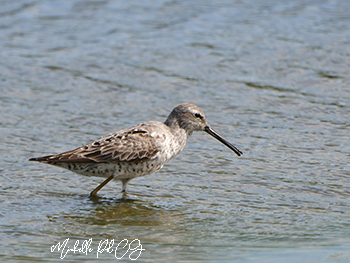
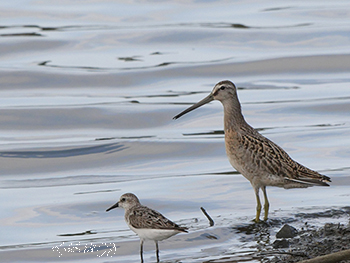
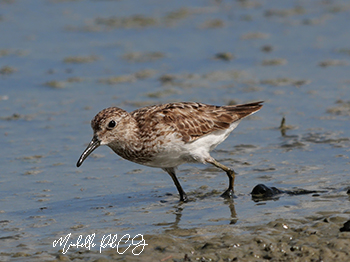
An observant observer here and there may have already noticed: the first swallows have arrived on the island. And although they’re nowhere near the numbers that arrive around late August/early September, their presence, along with several other migratory bird species, marks the beginning of the autumn migration. A bit early perhaps, but nevertheless, for birdwatchers, it’s a sign that the fun can begin. Most of the bird species we’ll see during this autumn migration are those that fly south from North America after their breeding season to spend the winter months in the Southern Hemisphere. They then visit our island (and Aruba and Bonaire) to rest from their long journey and forage for food to strengthen themselves for the rest of their journey to South America.
Besides this terrestrial migratory bird, there are primarily the first waterfowl or wading birds to arrive in the saliñas, inland waterways, and dams that still contain water. The following species can be seen in the photos: the Short-billed dowitcher (two birds are in the photo, the larger of which is the short-billed dowitcher with an extremely long bill and standing high on its legs), the Least sandpiper (small with a slightly curved bill and yellow legs), and the Stilt sandpiper (with a long, thin black bill that curves slightly downward).
Chirp in the Bushes
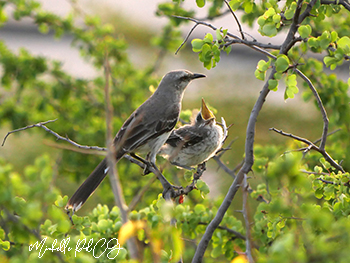
The observant hiker or garden owner has probably heard it many times in recent weeks: a very high-pitched, repetitive “chirp” that seems to come from deep in the bushes, constantly shifting position until it becomes so repetitive you barely register it. Chances are you’ve heard the young of a Chuchubi or Tropical mockingbird (Mimus gilvus) somewhere in the garden or along the trail. These parents are also quite busy with their offspring, especially because the young Chuchubi are classified as semi-precocious. They stay only briefly, a few days, in their “safe” nest made from the thorny branches of trees like the Wabi. However, as soon as their legs gain some strength, they start moving around. Much to the annoyance and stress of their parents. Not only are they never in the same place, hence the chirp that’s supposed to indicate their location, but it also often makes the young birds more vulnerable because they don’t always fully recognize the dangers of their surroundings. Sometimes, for example, they suddenly find themselves squeaking on top of a bush, easy prey for a bird of prey, or they sit exposed on the ground, easily falling victim to a cat, dog, or rat. Mom and dad work like crazy, constantly bringing in food and keeping an eye on the area for potential predators. The youngsters’ diet is very diverse, consisting of fruits and insects, small reptiles, and sometimes even unhealthy bread, chips, and other leftovers from human food.
Trupial kachó nests
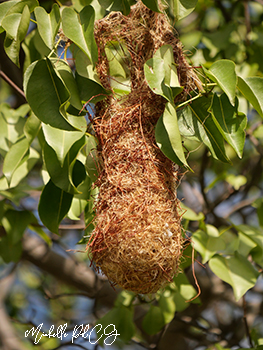
The Yellow Oriole or Trupial kachó is currently quite busy caring for its young. In various locations on the island, from Christoffel Park to the city center, the characteristic hanging nests hang in tall trees, often in clusters. Sometimes these are older, dried-out nests from previous broods or other pairs. If a nest hasn’t dried out completely and is still usable, it is repaired and reused. If not, but the location is still attractive, a new nest is built next to it.
Currently, most active nests still contain chicks that are continuously fed by both parents. Some chicks are already so old that they have left the nest but are still being cared for by their parents. This is clearly audible. When either mother or father Trupial kachó is nearby, they emit a call, after which the chicks actively squawk in the bushes to attract attention and be fed.

 Bird Watching Curaçao - HOME
One thought on “Bird watching on Curaçao in August”