
Bird watching on Curaçao is a surprise throughout the year. The island may be small (444 square kilometers or +/- 171.4 square miles), but has many small habitats spread out from the east to the west. Even in the inner city of Unesco World Heritage Willemstad, there are many areas where a bird can hide, eat, nest or just rest. Which makes every corner of the island potentially interesting for birders.
Temperatures drop in the month of December and even though it will still be hot on any given day, the temperature difference between day and night is usually enough that local people will grab a pullover or a blanket at night. It is also enough to produce dewdrops on vegetation, an occurrence nature will happily make use of. Several birds and other wildlife will be active drinking dewdrops from vegetation whenever possible and will also be more active in the early morning. Activity will diminish when temperatures rise during the day but it is still worth it to continue birding even when the sun is positioned higher into the sky, as a lot of species will continue their activity throughout the day. If dams are filled due to rain showers, bird diversity increased dramatically in these areas especially of the water stays for weeks on end. If it isn’t the case, even a puddle of water on the side of the street might be enough to attract a variety of bird species, coming to drinks or bath. Keep your camera ready.
A puddle is a golden location
Like suggested in the introduction, it might be very interesting to visit dams on the island in the rainy season. December is in the middle of the rainy season, and if some serious rain showers have hit the island, puddles of water in dams and even dams that are completely filled up make for the best birding areas of the season. Availability of food and fresh water attract shorebirds as well as waterbirds such as ducks, coots and gallinules. A perfect birding area is the RAMSAR site of Muizenberg Dam, a hotspot. Check out most recent visits of this site on eBird here: Dam Muizenberg, Curaçao, Curaçao – eBird Hotspot
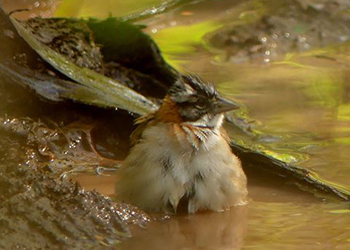
Besides dams also be on the lookout for water puddles on the side of the road, in nature parks but also in the garden of the location you are staying. These fresh water puddles attract an enormous variety of garden birds as well as birds of prey like the Crested caracara that visit to drink and bath. Or the cute Rufous-collared sparrow, one of the native breeding birds on the island
Royal terns stay over
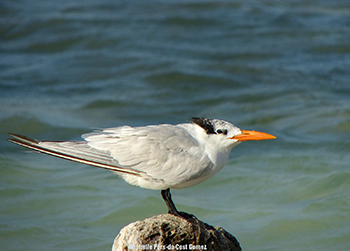
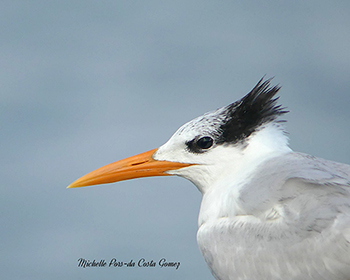
Breeding season of waterbirds such as terns and gulls is from mid March to mid August on the island and many species of terns come to the island especially to breed. This doesn’t mean that there will be no terns on the island in other months of the year. A group of Royal terns stays on the island throughout the year and can be found in winter plumage in several location on the island. A good place to start is at the Water production plant and inlet at Koredor, a popular area close to the Mangrove Park in Otrobanda that attracts many people for daily walks and other sports. Look along the peers and on the poles along the coastline to spot these terns and also Laughing gulls in winter plumage.
Royal terns and Laughing gulls can also be found around the popular surfing beach of Playa Canoa as well as along the coastal area of Marie Pampun.
Ducks visiting: Lesser scaup and American wigeon
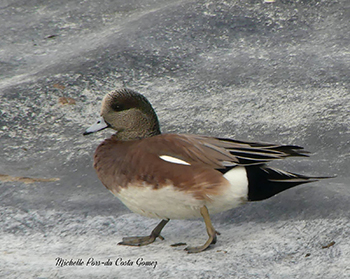
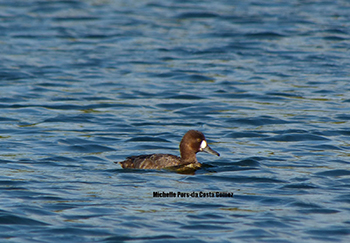
True, several rare duck visitors will visit the island whenever they feel like it, but the months of November and December are especially good for spotting the elusive American Wigeon and Lesser Scaup. Usually its individual birds that will be discovered on fresh water ponds (dams that are filled up, water treatment plants), but occasionally you can find groups of up to 5 individuals in winter plumage. They hide perfectly between the increasing numbers of Blue-winged teals and White-cheeked pintails. Key is to take out the binoculars and scan every single bird individually for the tell-tale characteristics of these occasional visitors.
Winter-visitors: Sanderlings
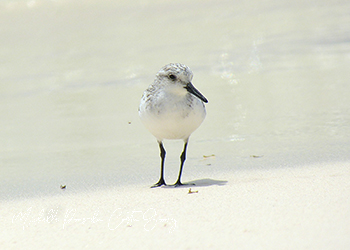
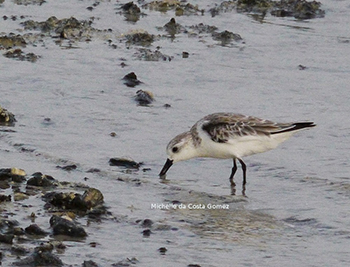
In the summer you will hardly see a Sanderling on the island as almost all birds have moved back to their breeding grounds in the arctic tundra’s of North America. It is in fall and especially winter that you will be able to spot these birds, often mixed up in groups with Ruddy turnstones, along beaches and other coastal areas where they look for food in sand and between pebbles on the beach. The best location to spot larger groups of this species is the RAMSAR-area of Klein Curaçao, a boat ride away from the main island but well worth your birding time, if you have enough patience and are heat and sun resistant, especially during autumn, early winter and spring. The island harbours some interesting bird surprises. Check out the hotspot here: Klein Curaçao, Curaçao, Curaçao – eBird Hotspot

 Bird Watching Curaçao - HOME
One thought on “Bird watching on Curaçao in December”