

The first question we get from birders visiting the island of Curaçao is: ‘Can you recommend locations we can visit to spot birds?’ This question has many different answers. Curaçao might be relatively small in surface, but has an incredible variety of both native birds, migratory birds and new introductions whether by natural forces, or mankind, non-problematic or invasive. It all depends on what species you want to see exactly and how much time you have to spend searching for birds. In this series we introduce you to a variety of areas depending on the type of birds you want to see. With some tips and tricks and do’s and don’ts. This is the fourth article in a series of 10!
Yellow-crowned Night Heron

Night Herons are a special group of birds that can be found almost all over the world, but are small in species numbers. Only 7 species in total are recognized in the world today, with various other species extinct or only known from fossils. Most of the Night herons are native to Asia, Australia, Micronesia, Africa, Europe and Russia. The Caribbean is home to 2 different species of Night heron, the Black-crowned night Heron (which can also be found in Europe and Asia) and the Yellow-crowned Night Heron which can only be found in the Americas and the Caribbean. Both species are breeding birds on the island and are relatively common in the vicinity of water, both sea water and fresh water basins. However the Black-crowned Night Heron is much more elusive and you often really need to have a good look to be able to find them. The Yellow-crowned Night Heron is rather easy to spot if you know where to look and especially when to look.
Hunters from dusk till down
The name says it all, Night Herons hunt at night. But in reality this is not a given. Night Herons actually start being active the moment the sun starts getting lower and especially the Yellow-Crowned Night Herons will actively hunt during the early hours of the day during dawn of at the end of the day during dusk. If they are on secluded area where the hot rays of the morning sun don’t reach easily you can observe them hunting far into the morning hours.
Where to spot Yellow-crowned Night Herons?
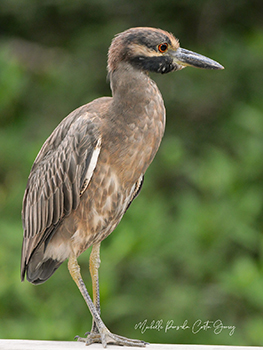
Photo by Michelle Pors-da Costa Gomez
One of the easiest locations to spot and photograph both adult and immature Yellow-crowned Night Herons is the well- known and very centrally located Mangrove park. This area with its many mangroves provide ample of shadow during the hot hours of the day and many birds will use this area to rest of look for food. Take your time wandering over the footbridges and take a good peek in between the mangroves for both adult and immature birds roosting, usually sitting on a mangrove root. Some will also use the railing of the footbridges to sit on, and usually you can come pretty close to them. If you notice the animal getting restless though, take some steps back until the bird is relaxed again.
What makes this area a big yes for birders, is the proximity to the cruise ship terminal making it really easy to get off board and visit the area on foot.
Another location to spot Yellow-crowned Night herons is the beach, and one of the beaches on the island with a high rate of success is the so-called ‘turtle beach’ of Playa Piskadó at Westpunt. Below the overhanging limestone rock formations you will find both adult and immature birds hunting for crabs or fish leftovers the fishermen throw in the sea. The early morning is often best as there are almost no visitors than overcrowding the tiny beach.
Do make sure that you don’t leave anything in your car when parking this early. As is often the case cars might be broken into if you leave a bag or anything else.

 Bird Watching Curaçao - HOME
What a variety of herons.
LikeLike