
The first question we get from birders visiting the island of Curaçao is: ‘Can you recommend locations we can visit to spot birds?’ This question has many different answers. Curaçao might be relatively small in surface, but has an incredible variety of both native birds, migratory birds and new introductions whether by natural forces, or mankind, non-problematic or invasive. It all depends on what species you want to see exactly and how much time you have to spend searching for birds. In this series we introduce you to a variety of areas depending on the type of birds you want to see. With some tips and tricks and do’s and don’ts. This is the fifth article in a series of 10!
Migratory species
More than 200 species of birds visit the island according to the latest counts, some only seen very sporadically and considered to be infrequent of rare visitors, and others spotted every single year during fixed time frames and as such considered to be migratory species or regular visitors. There are two major migration periods in which chances to spot migratory bird species are at their highest; during the so-called spring migration which is roughly the period of March to the end of May; and de so-called fall migration which starts in August and finishes somewhere in the middle of November. All depending on weather conditions as well as environmental conditions in the place they come from.
During spring migration the island usually sees the arrival of species that have overwintered in South America and are on their way back to North America to breed in the spring and summer months. Sometimes species that are breeding birds in South America will look for warmer food-rich areas in the North as well and might occasionally visit the island, however this is a rare occurrence. The fall migrations brings the most birds in numbers as well as in species diversity when birds that breed in North America fly south motivated by food availability, habitat, or weather circumstances in their breeding range. Most migratory species use the island as a stepping stone, a much needed place to rest and replenish their fat reserves before continuing the journey to South America. Some however, decide to stay over and overwinter on the island. One of those species is the Osprey.
Osprey
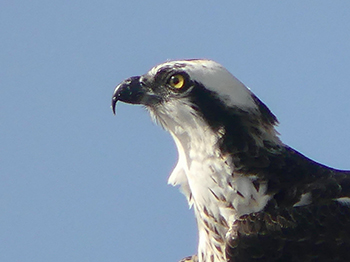
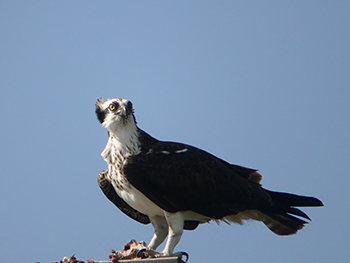
Ospreys are majestic birds of prey that are very present with their white and black coloration and large yellow eyes. These birds do not breed on our island but can usually be seen throughout the year, even though they are migratory birds. Both adults and young Ospreys in North America will migrate southwards during fall and will usually start to arrive on the island at the end of September/beginning of October. When they start arriving the density of birds can be astonishing, with 1 bird per kilometer of coastline and sometimes even less. They rest on light poles, in mangrove trees and limestone rocks along the coast, hunting for fish and replenishing their energy before most of them continue to South America. But there is always a small group of birds that stay, especially when they have found a good area with a perfect place to roost and the perfect patch of sea to catch their fish. Approximately 20-60 individuals stay on the island during the winter months, a number that varies each year. Most of these individuals will stay until the spring, and will start their journey back to North America to breed. But the young adults, which still have 1 or 2 years before attempting their first breeding adventure, often decide to stay put and can be spotted almost year round.
Where to spot Ospreys in Curaçao?
As mentioned above, Ospreys prefer areas where the sea is close and can often be found alongside the rough limestone coastline. However one of the places you will often be able to spot an Osprey is on the road call the Don Martina Blvd or Emancipatie Blvd close to the busy section of Saliña. Here you can see Ospreys sitting on the light poles alongside the road almost every day, with or without their catch of the moment in their claws. There is some space on the side of the road to put your car to be able to observe them but do not get out of your car. Ospreys are very keen observers and will get spooked easily when seeing someone stepping out of a car. Observing from the car is usually not a problem. And of course traffic can be dangerous here so be careful.
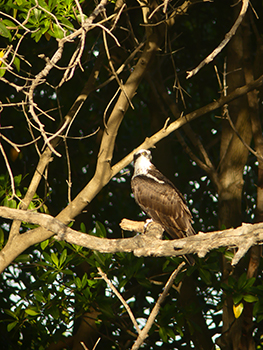
Another location Ospreys find particularly nice to roost is the Mangrove park close to the cruiseport. In between the mangrove trees, usually on a perch on which the bird can oversee its surroundings, you can find at least 1 Osprey and often even 2 of them.
Close to the Mangrove park you will find the area of Koredor with popular fish restaurants as well as the water production company. This area, rich is small fish, is an ideal location for spotting Ospreys. Look for lamp posts, roofs, fishing boats or even on top of the tanks at the water production company or alongside the shoreline to have a chance at encountering these majestic birds. But always keep your distance. They just don’t fancy people that much!

 Bird Watching Curaçao - HOME