
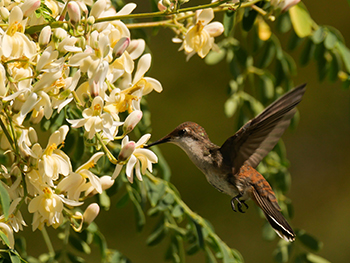
Photo by: Michelle Pors-da Costa Gomez
The first question we get from birders visiting the island of Curaçao is: ‘Can you recommend locations we can visit to spot birds?’ This question has many different answers. Curaçao might be relatively small in surface, but has an incredible variety of both native birds, migratory birds and new introductions whether by natural forces, or mankind, non-problematic or invasive. It all depends on what species you want to see exactly and how much time you have to spend searching for birds. In this series we introduce you to a variety of areas depending on the type of birds you want to see. This is the sixth article in a series of 10!
The smallest bird in the world
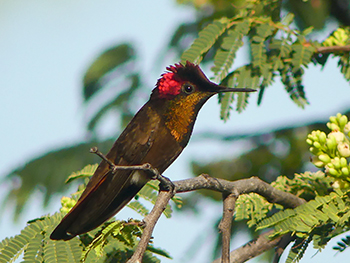
Photo by: Michelle Pors-da Costa Gomez
The smallest birds in the world, and also the feistiest; hummingbirds speak to almost everyone imagination and are almost always on the ‘to see’ list of visitors to the island, whether they are birders or not. Even the people who are the less interested in anything concerning nature (even though a beach and the sea are also part of nature, but hey let’s not focus on details 😉), can only stare in utter fascination when one of these small flying jewels come by and visit a flower in the vicinity of the beach chair. Or just sits on a twig stretching its tiny wings, of fluffing its feathers. When you start imagining how the tiny bodies of these bird harbour all the necessary organs such as the heart, lungs, stomach and intestines, it seems almost impossible that these gorgeous creatures can live at all, let alone produce a nest with almost always to chicks.
Two species of hummingbird
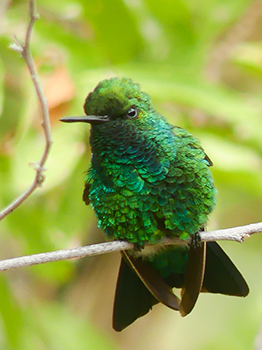
Photo by: Michelle Pors-da Costa Gomez
Curaçao has 2 species of native breeding hummingbirds; the Blue-tailed Emerald and the Ruby-topaz hummingbird. Many people, also locals, believe that there are 4 species as they often take males and females as separate species. Both species display extensive differences between the males and females, the males being the ones elaborately coloured while the females are duller in their appearance. Logical if you consider that it’s the females bearing the responsibility of making nests, incubating the eggs and taking care of the chicks. It would be dangerous to be elaborately coloured when you try to hide the chicks from hungry predators.
Of the 2 species the Blue-tailed Emerald is the most common species of the two and can be found all over the island in sometimes surprising locations. The Ruby-topaz hummingbirds is much rarer and sometimes seemingly disappears from the island completely in the dry season when almost no flowering trees can be found.
Where to find the hummers?
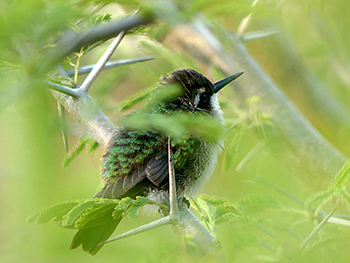
Photo by: Michelle Pors-da Costa Gomez
The best advise to give visitors in search of hummingbirds is to stay close to home. If there are colourful flowers in the vicinity of where your staying, think of bougainvillea and other tropical flowers, chances are you will find the hummers there. So gardens of hotels, apartment buildings and also beach clubs which are rich in tropical flowers are a haven for both species. Keep your eyes open in the vicinity of yellow, pink and orange flowers especially. In 9 out of 10 times you will be able to find both the male and female Blue-tailed Emerald. The case of the Ruby-topaz hummingbird is a little bit more complicated, as these are not only rarer, but often chose to stay far away from humans. This does not mean they will not feed an stay in gardens, but they will keep well above your head. The most important tip is to look up in high flowering trees such as the orange-flowered Karawara Spañó, the yellow-flowered Yellow Poui or the pink flowered cedarwood tree, all of which are cultivated trees you can find in the inner city of Punda and Otrobanda alongside the streets. Just remember to always look up and have patience to find them. They like to hide out in the shadows, and like any other hummingbird that means they will look colorless when they do until a ray of sunshine hits their feathers, and than the party starts!

 Bird Watching Curaçao - HOME