
Bird watching on Curaçao is a surprise throughout the year. The island may be small (444 square kilometers or +/- 171.4 square miles), but has many small habitats spread out from the east to the west. Even in the inner city of Unesco World Heritage Willemstad, there are many areas where a bird can hide, eat, nest or just rest. Which makes every corner of the island potentially interesting for birders.
If the rainy season has been good up till now and dams and other waterways have filled up with water the chances of seeing waterfowl and other temporary migratory birds will increase on the island. Often though the rains are not sufficient and fresh water areas are scattered or not present. That is why it is ever so useful to check beforehand on ebird.org which areas are the most interesting to visit this month (https://ebird.org/region/CW?yr=cur). Be aware also that some areas that are mentioned and are hotspots, are not accessible to the public at all or only with a guide. The LVV-area is not accessible as this is a government area. Blue Bay Golf and Beach Resort has restricted access to birders without a guide because of some near misses on the golf course. In 2026 we will post some updates on the hotspots that are and those that are not accessible to the public.
Where have the birds been?
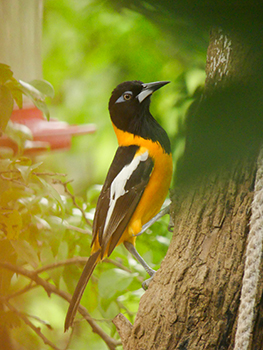
Several people wonder why there are so few garden birds in gardens during November and December, while they return in January. Birds like the orange (Venezuelan) Trupial, Bananaquit, Pigeons, and even the Tropical mockingbird like to live in gardens because there’s usually water and food to be found there. However, as soon as the rainy season arrives, the mondi becomes a paradise of food and water, meaning the birds are no longer forced to stay in built-up areas. Their territories then shift, and the birds often start breeding in the mondi. However, as soon as it starts to get drier again and food and especially water become scarcer, the birds slowly but surely move back to urban areas, and you’ll find them in larger numbers in gardens again.
Wintering Birds
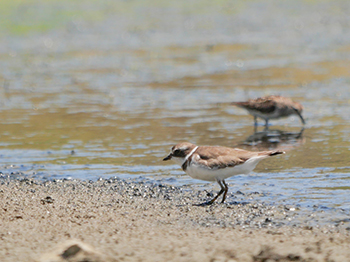
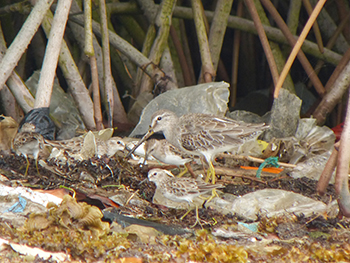
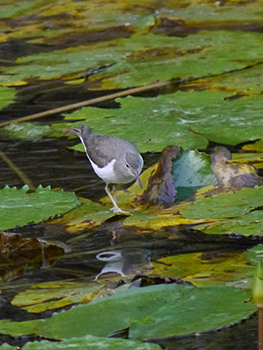
It’s not just humans who have chosen our island as a wintering location during the period when their home countries in North America or Europe experience drizzly, cold weather with short, chilly days. Birds also choose our island as a base to survive the winter months before returning to their breeding grounds in North America in the spring to produce the next generation. The Short-billed Dowitcher (Limnodromus griseus), is one of those migratory birds. This species winters on the island in saliñas and former salt pans, and also along the shallow coasts of inland waterways, where they use their long bills to search for invertebrates in the mud. Besides the Short-billed Dowitcher, the Semi-palmated Plover (Charadrius semipalmatus) also winters on the island. Young birds can be found year-round, while adults fly back to their breeding grounds in the spring. The same applies to the year-round Spotted Sandpiper (Actitis macularius). Despite their name, the birds that overwinter here in their winter plumage do not have spots on their breasts. In spring, this changes, as black spots form on the breasts, and the birds prepare for the journey back to their breeding grounds.
Awaiting the breeding season
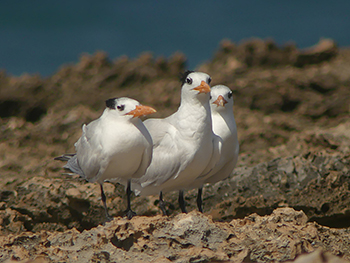
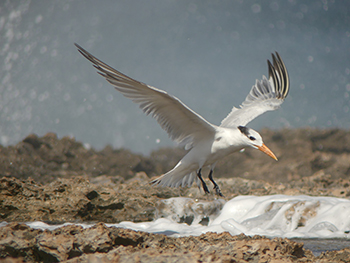
Several bird species are wrapping up their breeding season, while others are slowly preparing for a new one. Seabirds such as royal terns and laughing gulls are good examples. Starting in January, the numbers of terns and laughing gulls will gradually increase as individuals arrive from other regions. From mid-March, the breeding season for these birds will then begin, with several coastal locations once again serving as breeding grounds. The growing flocks can now be seen at Koredor and Playa Kanoa, among other locations.
The Metamorphosis of the Blue-winged Teal
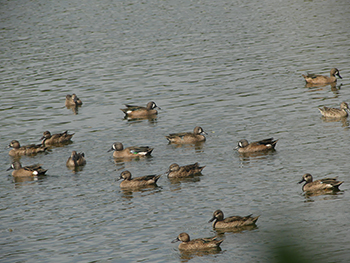
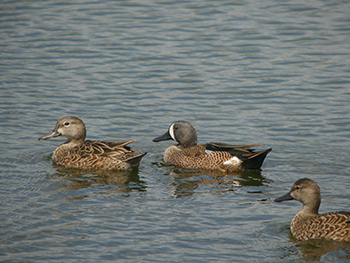
Blue-winged teals, or blue-winged teals as they are called, can be found on Curaçao year-round but do not breed here. While the birds are generally inconspicuously colored, a true metamorphosis occurs in the males (drakes) during December and January. They change to their spectacular breeding plumage, with a dark gray head, black beak, and the distinctive crescent-shaped white patch behind the beak. The birds then form pairs and eventually leave the island to breed elsewhere. Their exact location is unclear.
Currently, flocks of these birds can be seen at the Fortuna Abou dam, occasionally at the Klein Hofje water treatment plant, and also in the ponds of Blue Bay Golf and Beach Resort, which can be viewed from the beach or the Golf Club House. Access to the golf course is prohibited.

 Bird Watching Curaçao - HOME
One thought on “Bird watching on Curaçao in January”