With a total of 144 species of birds registered Klein Curaçao, the tiny island on the east side of main island Curaçao, marks the second spot in the top 10 of birding hot spots on the island, only topped by the number one Blue Bay Gulf and Beach resort, on eBird.org. For a tiny speck in the middle of the ocean this is truly a feat considering the island has no forest, no natural fresh water ponds, a raw limestone rock surface and almost continuous salt water spray spread out by the wind.
In the 90’s reforestation effort that continued in the early years of the 2000’s introduced some native plants on the island of which some, such as the Sea grape, the Buttonwood and also the Sea purslane are doing rather well, creating small patches of habitat that provide shade, shelter, insects and some fruits. Klein Curaçao is used as a popular recreational area for day tourists who are brought to the island by boat, with two larger beach huts built by tour operators on the island. Behind one of these huts there is small brackish water marsh-like area, with Buttonwood, and some other salt-loving plants, formed with some of the fresh water brought in by boat and that is used by the guests after which it leaks in this area.
The bird list recorded for Klein Curaçao consists of a large collection of seabirds, either breeding on or only visiting the island to roost throughout the year such as Least terns, Sandwich terns, Red-footed boobies, Brown Boobies and Royal terns, migratory sea birds such as American Golden plovers, Black-bellied plovers and all sorts of sandpipers, migrating raptors such as Ospreys or Peregrine falcons and maybe the most surprising part; a large part of the bird species list also consists of a variety of terrestrial birds including many species of warblers. Now it is important for birders to realize that despite the amazing list of bird species recorded on the island, this doesn’t mean that this ‘Valhalla’ for birds is a slam-dunk success if you visit. Most of the registered terrestrial birds are recorded thanks to the weekly bird monitoring efforts of local birder Mr. Rob Wellens, who visits the island at least once a week, and makes sure to cover all the areas in which bird are to be expected. This work made sure that the island is covered on a weekly basis, hence recording birds that are often only visiting for a day or even less during migration, using the island as a much coveted location to rest and eat before continuing the journey to the overwintering grounds. So do not expect masses of birds, except during the sea bird breeding season in which large areas on Klein Curaçao are off limits to birders to protect the sensitive breeding populations on the island. Efforts to protect the birds are in hands of the Klein Curaçao Conservation Foundation. If you visit Klein Curaçao during the migration season in autumn, you will have to search the nooks and crannies of the island to find warblers, cuckoos, tanagers and other migratory birds in the scarce vegetation that is to be found there. Usually they are alone, and they are very good at hiding.
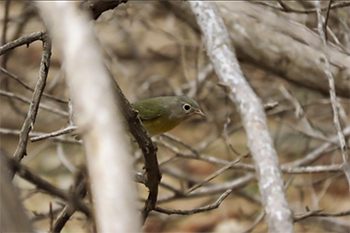
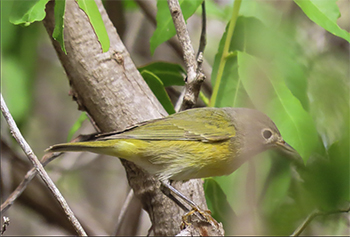
Despite its hiding ability Rob Wellens made another startling discovery on Klein Curaçao on October 14th. During his birding efforts, he photographed a tiny warbler of about 12 cm in length, that was hopping around in the bush looking for insects. The bird, smaller than a Blackpoll warbler which was also roaming in the bushes no too far away, had a distinctive coloration including a yellow rump that had Rob on alert. After careful consideration it was concluded he had another first record of a bird species never before recorded on Klein Curaçao nor on the main island of Curaçao: a Nashville warbler (Leiothlypis ruficapilla). He only saw the animal on the 14th of October. Visits to the area on the 17th and 21st of October did not result in seeing the bird again.
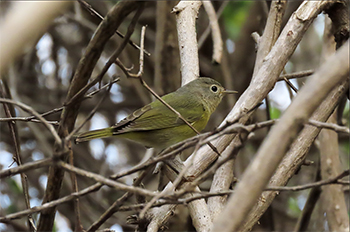
All photos by Rob Wellens.